AI Tools Solving Business Puzzles with
Unpacking the Future: How Core AI Trends and Tools Are Solving Your Toughest Business Problems
Key Takeaways
- The most transformative AI applications are often not generative (like chatbots) but focus on solving complex operational puzzles through Combinatorial Optimization.
- Decision Intelligence is an emerging AI field that excels at making the absolute best choices under strict business constraints, directly impacting efficiency and profitability.
- Industries like logistics, manufacturing, and finance are leveraging AI to optimize routes, schedules, and resource allocation, saving significant costs.
- Businesses can start by identifying manual, complex decision-making processes related to scheduling, routing, and allocation, then defining clear goals and constraints.
- Tools like n8n are crucial for bridging the gap, automating the flow of data from business systems to AI models and back to operational teams.
This deeper current of AI is less about conversation and more about computation. It tackles challenges that have plagued industries for decades: How do you schedule a mobile workforce to minimize travel time while maximizing customer appointments? How do you arrange items in a warehouse to reduce picking time and shipping costs? How do you allocate a marketing budget across twenty channels to achieve the highest possible return on investment? These aren’t simple tasks; they are intricate optimization problems with millions, if not billions, of possible solutions. Recently, a fascinating technical post explored a classic logic puzzle—the “Partridge Packing Problem”—using a specialized AI modeling tool called MiniZinc. While seemingly academic, this exercise perfectly illustrates the immense, untapped potential of AI for solving real-world business logistics, resource management, and strategic planning challenges. It’s time to look beyond the hype and unpack how these foundational AI capabilities can redefine efficiency in your organization.
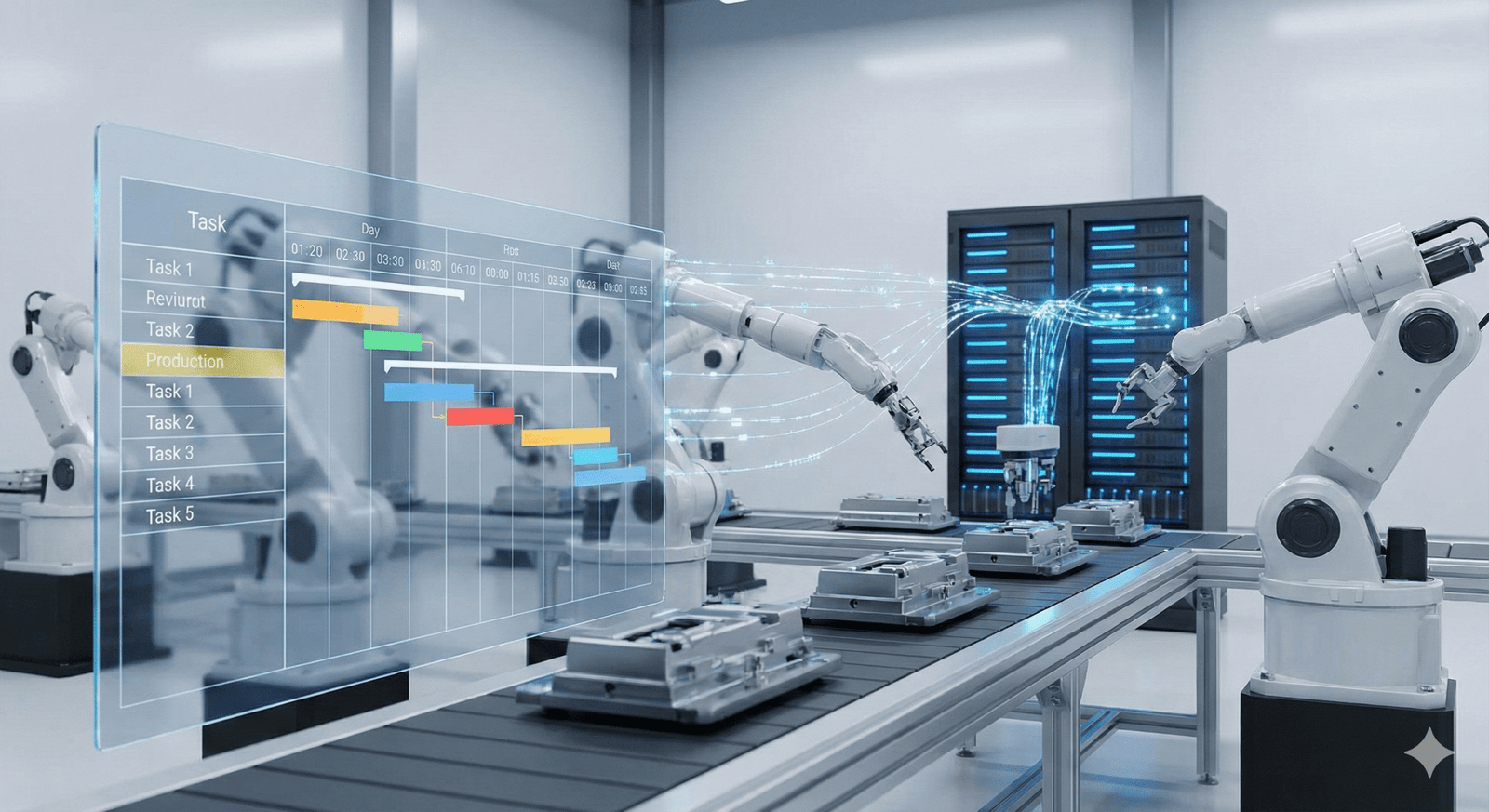
The Hidden Power of AI Trends and Tools: From Puzzles to Profits
The Partridge Packing Problem, in essence, is about fitting a specific number of items (partridges) into a set of containers (pear trees) under a complex set of rules and constraints. It’s a combinatorial puzzle that showcases how a machine can explore a vast landscape of possibilities to find a perfect solution far faster than any human could.
Think of the “partridges” as your business resources: delivery trucks, service technicians, project team members, or even marketing dollars. The “pear trees” are your tasks, containers, or objectives: customer locations, work orders, project milestones, or advertising campaigns. The “rules” are your real-world business constraints: delivery windows, employee skill sets, budget limits, and material availability.
Suddenly, the puzzle isn’t so abstract. It’s a direct metaphor for the core operational challenges you face every day. This is the domain of Combinatorial Optimization, a field of artificial intelligence and applied mathematics dedicated to finding the optimal solution from a finite set of possibilities. For decades, solving these problems required immense computing power and highly specialized expertise, putting it out of reach for all but the largest corporations.
Today, this is changing rapidly. The convergence of cloud computing, more accessible modeling languages (like MiniZinc), and the rise of sophisticated AI algorithms has democratized optimization. This represents one of the most significant, yet under-discussed, AI trends and tools available to businesses. It’s a shift from AI as a creative partner to AI as a master strategist and logistician, capable of delivering concrete, measurable improvements to your bottom line.
Beyond Generative AI: The Rise of Decision Intelligence
While Generative AI (like ChatGPT and Midjourney) excels at creating novel content based on patterns in existing data, Optimization AI, a key component of a field often called Decision Intelligence, excels at making optimal choices under constraints.
- Generative AI asks: “Based on everything I’ve learned, what is a likely or creative new output?”
- Optimization AI asks: “Given these specific goals and these strict limitations, what is the absolute best course of action?”
This distinction is crucial for business leaders. While improving your marketing copy with a generative tool is valuable, redesigning your entire supply chain route to save 15% on fuel costs is transformative. Decision Intelligence is about using AI to enhance and automate complex decision-making processes, moving beyond simple task automation to strategic workflow optimization.
This trend is quietly reshaping industries that rely on intricate logistics and resource management:
- Supply Chain & Logistics: Companies are using AI to solve the “Traveling Salesman Problem” on a massive scale, optimizing delivery routes in real-time based on traffic, weather, and new order influxes. They are perfecting warehouse layouts and inventory placement to minimize forklift travel and order fulfillment times.
- Manufacturing: AI-powered systems analyze production schedules to maximize machine uptime, minimize changeover times, and reduce waste. In industries that use raw materials like metal sheets or fabric, AI solves “cutting stock problems” to determine the most efficient way to cut pieces from a larger whole, saving millions in material costs.
- Finance: Portfolio managers use optimization algorithms to build investment portfolios that maximize returns for a given level of risk. Banks use similar technology to manage cash reserves across ATM networks, ensuring availability while minimizing holding costs.
- Energy: Utility companies leverage AI to optimize power grid distribution, predicting demand and routing energy from various sources (solar, wind, traditional) in the most efficient and cost-effective manner.
The common thread is complexity. These are not problems that can be solved with a simple spreadsheet formula or human intuition alone. They require an AI’s ability to navigate a labyrinth of variables and constraints to find the single best path forward.

Practical Takeaways: How to Apply AI Optimization in Your Business
Understanding this trend is the first step; applying it is the next. You don’t need to become a data scientist or an expert in constraint programming to benefit. The key is to learn how to identify opportunities for optimization within your own operations.
1. Audit Your Core Operational Processes:
Begin by mapping out your most critical, resource-intensive workflows. Where do the biggest costs and inefficiencies lie? Pay close attention to processes involving:
- Scheduling: Employee shifts, service appointments, project timelines, machine usage.
- Routing: Delivery fleets, sales team travel, field service technician dispatch.
- Allocation: Budget distribution, inventory management, staff assignment to projects.
- Packing/Layout: Warehouse binning, container loading, office space design.
2. Identify the “Rules” and “Goals”:
For each process, define the objective (the “goal”) and the limitations (the “rules”).
- Goal: What are you trying to maximize or minimize? (e.g., Minimize total fuel cost, maximize number of completed jobs, minimize production time, maximize profit).
- Rules: What are the constraints you must operate within? (e.g., Drivers can only work 8 hours, each project needs a senior engineer, a specific machine can only process 100 units per hour, the marketing budget cannot exceed $50,000).
3. Look for Manual, Complex Decision-Making:
Where are your managers or dispatchers spending hours with spreadsheets, whiteboards, and gut feelings to try and solve these puzzles? These are prime candidates for AI-driven optimization. If a decision is complex, repetitive, and has a significant financial impact, it’s worth investigating.
4. Embrace a Data-First Mindset:
Optimization engines are fueled by data. The more accurate and granular your data on travel times, job durations, employee skills, and inventory levels, the better the AI can perform. Investing in data collection and hygiene is a prerequisite for leveraging advanced AI.
The AITechScope Advantage: Bridging Strategy and Execution
Recognizing an optimization opportunity is one thing; implementing a robust, automated solution is another. This is where the gap between knowing and doing often lies, and it’s precisely where expert guidance becomes invaluable. Simply having access to AI trends and tools is not enough; you need a partner who can integrate them into the fabric of your business.
At AITechScope, we specialize in transforming these complex operational challenges into streamlined, automated workflows. Our expertise is not just in identifying the right tool for the job but in building the end-to-end systems that deliver tangible results.
AI Consulting & Process Discovery (Our “AI TechScope”)
Our process begins with a deep dive into your business operations. We act as your strategic partners, helping you identify and frame your unique “Partridge Packing Problems.” We work with your team to define the goals, constraints, and data points necessary to build a powerful optimization model. We translate your business needs into a technical blueprint, ensuring the solution is perfectly aligned with your strategic objectives.
Custom n8n Automation & Workflow Development
Once the strategy is defined, execution begins. We leverage powerful low-code automation platforms like n8n to build the connective tissue for your AI solution. An n8n workflow can:
- Aggregate Data: Automatically pull real-time data from your CRM, ERP, scheduling software, and other sources.
- Communicate with AI Models: Feed this data into a specialized optimization API or model.
- Distribute the Solution: Take the optimized output—like a new set of delivery routes or an employee schedule—and push it directly to the people and systems that need it. This could be an update to your drivers’ mobile app, a new calendar invite for your team, or a dashboard for management.
This seamless integration, powered by n8n, turns a theoretical optimization into a living, breathing part of your daily operations. It eliminates manual data entry, reduces the chance of human error, and ensures your business is always operating based on the most optimal plan.
Website Development & Systems Integration
Often, the final piece of the puzzle is creating a user-friendly interface for your team to interact with these powerful new systems. Our web development expertise allows us to build custom dashboards and portals that present complex information in a simple, actionable format, ensuring high adoption rates and maximum impact from your new AI-powered workflows.
Intelligent Delegation with Virtual Assistants
By automating the core logic of complex decisions, you free up your team’s most valuable resource: their time. The ongoing management and monitoring of these systems can be seamlessly handled by our highly trained virtual assistants, ensuring your automated workflows run smoothly while your key personnel focus on high-level strategy and growth.
Your Call to Action: Start Optimizing Today
The landscape of AI trends and tools is vast and can be intimidating. While the world is captivated by AI that can write a poem or paint a picture, the greatest competitive advantages will be secured by businesses that harness AI to solve their most fundamental operational challenges.
The principle of the Partridge Packing Problem—finding the perfect fit under a web of constraints—applies to nearly every facet of your business. By embracing AI-driven optimization, you can unlock efficiencies that were previously unimaginable, reducing costs, improving service quality, and creating a more resilient and agile organization.
Don’t let complexity be a barrier to transformation. The tools and expertise exist to help you turn your toughest operational puzzles into your greatest strategic assets.
Ready to discover and automate the hidden efficiencies in your business? Contact AITechScope today for a complimentary consultation. Let’s build your AI-powered future, together.
Frequently Asked Questions
Q1: What is the difference between Generative AI and Decision Intelligence (or Optimization AI)?
Generative AI is designed to create new content (text, images, code) based on patterns it has learned from existing data. Its goal is creativity and plausibility. Decision Intelligence, on the other hand, is designed to make the best possible choice from a set of options given a specific goal and a list of constraints. Its goal is optimality and efficiency, not content creation.
Q2: My business isn’t in logistics or manufacturing. How can AI optimization help me?
Optimization principles apply to nearly any business. A marketing agency can optimize ad spend across channels for maximum ROI. A consulting firm can optimize staff assignments to projects based on skills, availability, and profitability. A retail business can optimize store staff schedules to match predicted customer foot traffic. Any process involving the allocation of limited resources is a candidate for optimization.
Q3: What kind of data do I need to get started with AI optimization?
The required data depends on the problem. For route optimization, you’d need data on addresses, vehicle capacity, and service time windows. For scheduling, you’d need data on employee availability, required skills, and task durations. The first step is always to have a clear understanding of your goal (e.g., minimize cost) and your constraints (e.g., budget limits, work hours), which will then define the data you need to collect.
Q4: What is n8n and why is it mentioned as a key tool?
n8n is a low-code automation platform that acts as the “glue” between your different business systems. In an AI optimization context, it’s crucial for automating the entire process. It can automatically pull the necessary data from your CRM or database, send it to the AI model for analysis, and then take the optimized solution (like a new schedule) and push it back into the systems your team uses every day, such as a calendar or a mobile app.
“`
Share this content: